
Dubai’s New 12km Road Corridor Set to Cut Emirates Road Journey to 15 Minutes
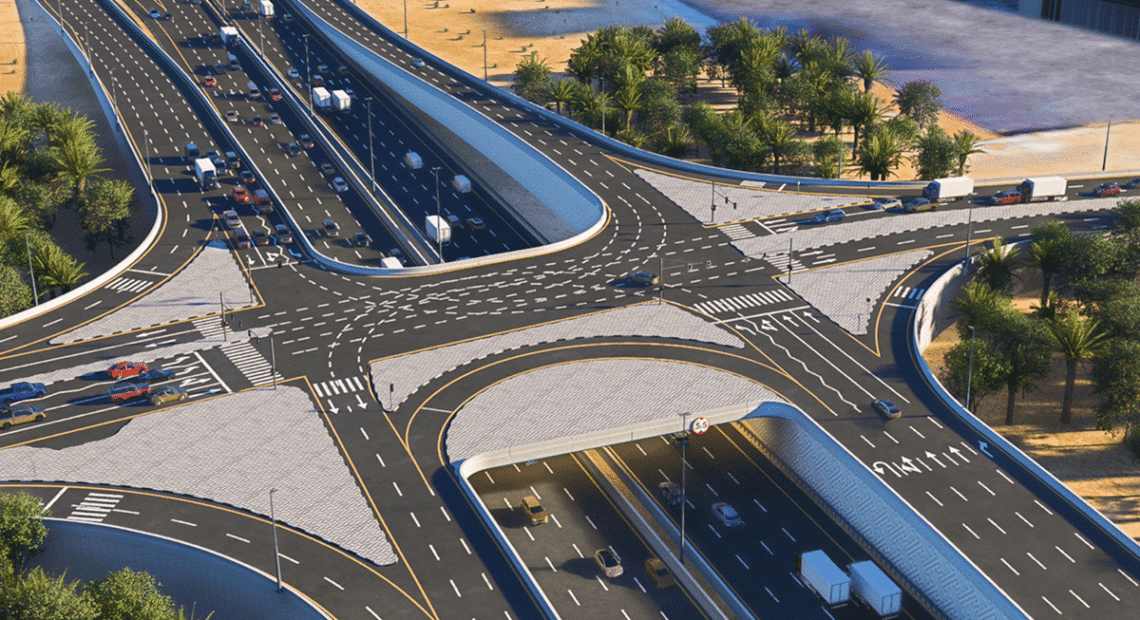
Dubai’s Latifa bint Hamdan Corridor will connect six key roads, add capacity to east-west travel and reduce a key cross-city journey by more than half when it opens in 2028.
Dubai is moving ahead with a major road project designed to make journeys across the emirate faster and smoother. The Roads and Transport Authority (RTA) has awarded contracts for the Latifa bint Hamdan Corridor, a 12-kilometre strategic route that will connect Sheikh Zayed Road with Emirates Road through several of the city’s busiest road corridors.
Once complete, the project is expected to reduce travel time between Umm Al Sheif Street and Emirates Road from 33 minutes to 15 minutes — a 54% reduction. The RTA has set the project’s completion target for the end of 2028.
The development is part of Dubai’s wider effort to expand road capacity in step with growing residential, commercial and visitor activity. It is intended to provide a new east-west connection and ease pressure on important routes including Al Khail Road, Sheikh Mohammed bin Zayed Road, Dubai–Al Ain Road and Umm Suqeim Street.
A corridor linking six major roads
The Latifa bint Hamdan Corridor will link Sheikh Zayed Road, Al Khail Road, Al Meydan Street, Sheikh Mohammed bin Zayed Road, Sheikh Zayed bin Hamdan Al Nahyan Street and Emirates Road. It will form an integrated route between western and eastern parts of Dubai, while improving access to nearby communities and development areas.
The RTA says the corridor will add 12% capacity to Dubai’s east-west road corridors. It is expected to handle about 16,000 vehicles an hour in both directions and more than 130,000 trips a day, serving an estimated 650,000 residents and visitors.
Areas expected to benefit include Nad Al Sheba, Al Barari, Dubai Hills, Dubai District One, Mohammed Bin Rashid Gardens, Living Legends, Majan and Global Village, as well as communities and commercial zones along Latifa bint Hamdan Street and Al Meydan Street.
Bridges, tunnels and new connections
The project will expand Latifa bint Hamdan Street to four lanes in each direction and build a system of multi-level free-flow interchanges, bridges and loop ramps. The scope includes seven bridges with a combined length of 2,300 metres and eight tunnels spanning 900 metres.
It will also include a new road connecting Al Khail Road with the extension of Latifa bint Hamdan Street. Parts of Al Meydan Street will be upgraded, with a new interchange and at-grade roads planned to improve traffic movement and support nearby development projects.
Larsen & Toubro (L&T) said its transportation infrastructure business has formally executed two RTA contracts for this work. The company said one contract covers the new Al Khail Road connection, bridges, tunnels and associated road works, while the second covers elements of the Al Meydan Street development, including an interchange and connecting roads.
Cycling link adds a mobility option
Alongside the road works, the project includes 12.5 kilometres of cycling tracks. These will connect with Dubai’s existing network to help create an integrated route from Al Qudra to Jumeirah, adding another mobility option for residents and visitors.
The new development follows earlier improvements to the western section of Latifa bint Hamdan Street. According to the RTA, the completed phase reduced the journey between Sheikh Zayed Road and Al Khail Road from 12 minutes to four minutes and improved access to the Al Quoz Industrial Area.
For drivers, the full corridor promises a more direct route across Dubai’s road network. For the city, it is another large-scale infrastructure project intended to support new communities, economic activity and long-term urban growth.